A winter day on the dike
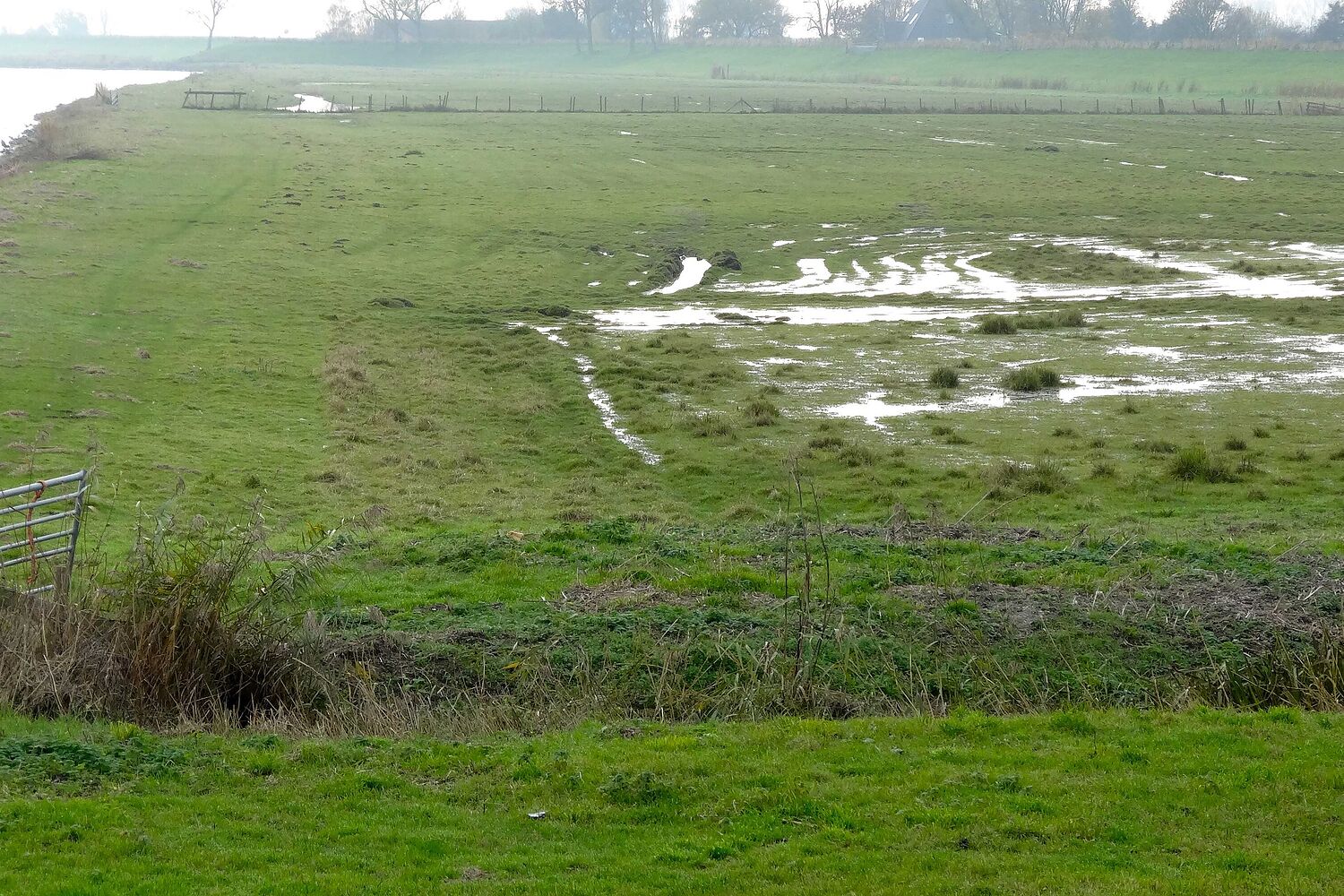
We don't get many real winter days any more. Mostly it's grey and five degrees and wet. But last week there were three days of frost in a row, high pressure, no wind, and on the Saturday I took the first train out and walked along the lake for most of the day.
The light on a frosty day is different. Thin, very clear, and low enough that every tuft of grass has a long shadow. The meadows outside the dike, the strip of land between the dike and the water, were white in the morning and turned green again wherever the sun reached. Where it didn't, in the lee of the dike, they stayed white all day.
The ditches had a skin of ice, not enough to stand on. The puddles on the dike road had the cracked kind of ice you can't leave alone. I stepped on every one of them, like a child. No regrets.
There were hardly any people. A man walking two border collies. A woman on a bike with a thermos in the basket. A few birdwatchers with telescopes on the dike, looking at ducks on the open water a long way out. One of them let me look: goldeneyes, he said. They looked like small black and white dots to me, but sharper ones.
What I remember most is the sound, or the lack of it. Without wind, a dike in winter is very quiet. You hear geese far off, your own footsteps on frozen grass, and sometimes the ice in a ditch making a strange sort of ringing sound as it settles. I stood still for a while just to listen to it.
I had my winter kit: thermal layer, fleece, the big jacket, gloves, a thick hat. I was still cold around three when the sun dropped behind the dike. Tea from the flask helped. So did walking faster.
By half past four it was nearly dark and the frost was coming back up out of the grass. I walked the last kilometre to the station with the lights of the village in front of me and pink sky behind. One of my favourite days on foot, and I'm aware it was basically ten hours of walking along a wall.